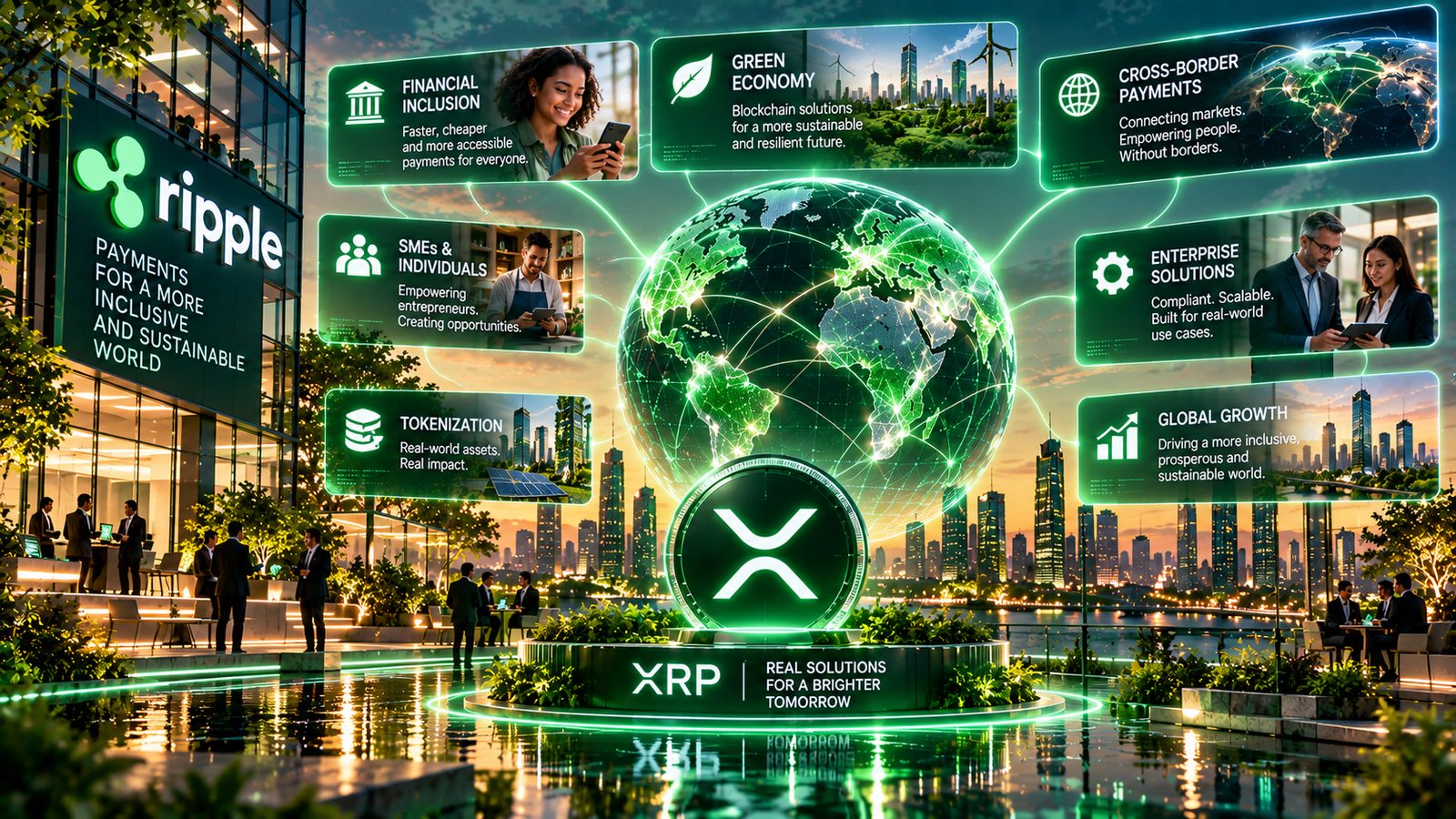
Ripple, XRP, and XRPL: Three Different Things
Ripple is a financial technology company. XRP is the native digital asset of the XRP Ledger (XRPL), and the XRP Ledger is a public and open-source blockchain network. The three are historically and technologically linked but not interchangeable. A successful commercial venture by Ripple does not automatically mean a rise in XRP's value, and a Ripple product can use fiat, RLUSD, XRP, or multiple assets depending on the use case.
Over a Decade Dedicated to Payments
Ripple has been building digital asset-based payment infrastructures since 2012. Its initial goal was to reduce cross-border payment friction: delays, pre-funding of accounts in multiple countries, and fragmentation of banking networks. In March 2026, Ripple indicated that Ripple Payments was operational in over 60 major markets and that the company held more than 75 licenses and authorizations worldwide. These figures come from Ripple and should be read as data communicated by the company, but they demonstrate the scope of the regulated activity.
From Payment Company to Comprehensive Infrastructure
The major change of the last few years has been Ripple's expansion beyond payment. In 2023, Ripple acquired Metaco, a Swiss specialist in institutional digital asset custody. In 2024, the acquisition of Standard Custody & Trust Company added a regulated trust company by the New York Department of Financial Services and strengthened the custody activity.
In December 2024, Ripple launched Ripple USD (RLUSD), a dollar-backed stablecoin available on XRPL and Ethereum. Ripple's documentation states that RLUSD is backed 1:1 by high-quality liquid assets, cash, and cash equivalents, with separate reserves and control requirements tied to the NYDFS framework.
2025: Prime Brokerage, Treasury, and Stablecoin Payments
In 2025, Ripple accelerated with several acquisitions. Hidden Road, acquired for $1.25 billion and then rebranded as Ripple Prime, entered Ripple into multi-asset prime brokerage, clearing, and institutional financing. Ripple also acquired GTreasury for $1 billion, opening an enterprise treasury management activity, as well as Rail, specializing in stablecoin payment infrastructure. The acquisition of Palisade then strengthened wallet-as-a-service and custody capabilities.
This strategy links several bricks: collecting funds, storing assets, managing liquidity, exchanging, financing, and making payments. Ripple now presents its offer as a end-to-end infrastructure for institutions and fintechs rather than a simple international transfer network.
The Role of RLUSD
RLUSD is playing an increasingly important role in this architecture. Ripple Prime uses it as collateral for certain products, while Ripple Payments integrates it into settlement flows. The stablecoin allows Ripple to offer a regulated dollar asset that can work with the blockchain infrastructure without necessarily exposing each client to XRP's volatility.
This does not make XRP useless: XRP still serves its native role on the XRP Ledger and can be used as a means of payment or intermediate asset when it brings liquidity benefits. However, Ripple's evolution towards RLUSD shows precisely why it is necessary to distinguish the company, its products, and the XRP asset.
The SEC Case: A Crucial Outcome, but Not a Total Victory
The dispute between Ripple and the US Securities and Exchange Commission has deeply marked the company's recent history. On August 7, 2025, the SEC and Ripple filed a joint stipulation ending their respective appeals. The SEC announced that this resolved the civil action against Ripple and two of its executives.
However, the final district court judgment remains in effect. It imposes a civil penalty of approximately $125 million on Ripple and an injunction related to future registration rule violations for certain institutional XRP sales. Previous decisions had distinguished institutional XRP sales, deemed unregistered contract offerings in some cases, from programmatic sales on platforms that were not considered such. Presenting the outcome as a total exoneration of Ripple would be inaccurate.
What Ripple Has Really Accomplished
The most tangible result is not a price prediction but the progressive construction of a regulated company covering multiple layers of digital finance: payments, custody, stablecoin, prime brokerage, treasury, and liquidity. Few first-generation crypto companies have developed a comparable presence in as many institutional functions.
The decisive question for the next few years will be less about how many acquisitions Ripple can announce and more about measuring their real integration: actual volumes processed, active clients, RLUSD usage, XRPL and XRP utilization, new activity profitability, and ability to compete with banks, payment networks, stablecoins, and other blockchains.